What Is a Snowman Inflatable Sky Dancer?

Time:2026-09-24 Author:Oliver
0%

A Snowman Inflatable Sky Dancer is a tall, fabric decoration shaped like a cheerful snowman. An electric blower pushes air through its body, making its arms and long form sway, bend, and rise. The movement catches the eye. A scarf may flutter, a carrot-shaped nose may bob, and the whole figure can seem to dance beside a storefront or in a yard. It is not a rigid statue or a balloon that floats freely; it needs a steady airflow and a suitable power source to stay upright.

This guide explains how the decoration works, what parts to look for, and where it may be used. It also covers practical details such as the blower, fabric, anchoring points, and setup space. These details matter: a snowman that looks charming in a product photo can be noisy, unstable, or simply too large for a small porch. Check the product’s dimensions and care instructions before buying. Keep the blower’s air intake clear, secure the base as directed, and avoid using the item in conditions its manufacturer does not recommend. A little planning helps. Still, inflatable decorations vary, and appearance alone cannot confirm their durability or weather suitability. That part deserves a closer look.
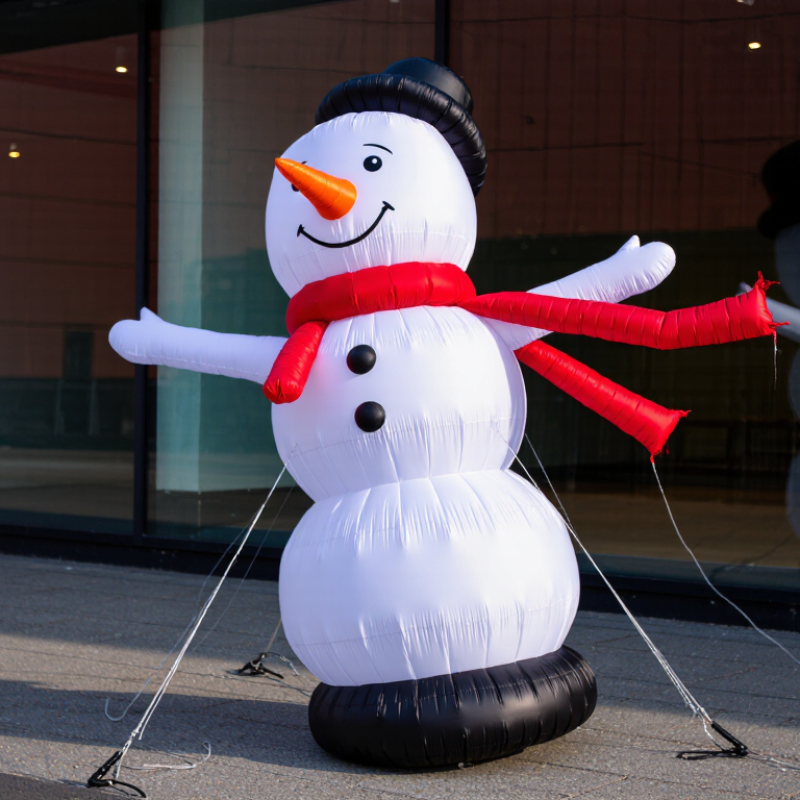
What Is a Snowman Inflatable Sky Dancer?

Definition of a Snowman Inflatable Sky Dancer

A snowman inflatable sky dancer is a fabric figure animated by air from an electric blower. Unlike a rigid holiday decoration, it bends and rises as airflow fills its body. Its loose arms and scarf-like details sway with the moving fabric, creating a lively snowman silhouette. The blower usually sits at the base, while a tethered skirt helps keep the figure upright. It needs clear space, a suitable power supply, and secure placement. Small setup details matter.

The Outdoor Advertising Association of America reported that U.S. out-of-home advertising revenue reached $9.1 billion in 2023. That figure covers many formats, not sky dancers specifically, but it shows the wider role of visible outdoor displays. A snowman version uses motion, height, and seasonal imagery to attract attention near storefronts or event entrances. Its effect depends on scale, viewing distance, and surroundings. A pale snowman may disappear against a bright winter sky; I would not assume bigger is always better. Follow the product’s operating instructions, and check the fabric and blower before use. A sagging arm can spoil the look.

Key Design Features and Components

A snowman inflatable sky dancer combines a fabric figure with a continuously running blower. Air enters through an opening near the base, passes through the body, and escapes through small vents. This airflow makes the snowman rise, sway, and fold back down. The cycle is the point.

Key components include a lightweight outer shell, reinforced seams, a blower, ground stakes, and tether points. Polyester fabric is common because it is light and can take printed details, such as a carrot nose or stitched-looking buttons. The base needs a wide air intake that stays clear of grass and loose fabric. Tethers help limit drifting, but they do not make an inflatable suitable for every wind condition. Check the product’s stated operating limits and inspect seams and cords before use. Small tears matter.

Lighting is often built into the body, usually as low-voltage LED modules. The U.S. Department of Energy’s LED report notes that LEDs use at least 75% less energy than incandescent lighting. That comparison concerns lighting technology, not the blower, which may account for much of the unit’s electricity use. A useful design detail is a weather-resistant electrical connection kept away from pooled water. In practice, instructions can be vague about placement. Measure the yard, allow room for the tethers, and keep the intake unobstructed.

What Is a Snowman Inflatable Sky Dancer?

Key Design Features and Components

A snowman inflatable sky dancer uses a blower to push air through a lightweight fabric body, making it stand and move. This example configuration shows one head, one torso, two arms, one blower, and four tether points. Designs vary; lights and decorative details may be optional.

How the Inflatable Figure Moves

A snowman inflatable sky dancer moves because a blower pushes air through its fabric body and out through openings near its base. The steady airflow keeps the figure upright, while loose arms and a flexible neck respond to changing pressure. When the air shifts, the snowman leans, twists, and rebounds. It can look spontaneous, but the motion comes from airflow and fabric tension.

The National Weather Service’s Beaufort wind scale describes light air as roughly 1–3 mph and a light breeze as 4–7 mph. Even gentle outdoor wind can add sideways force, making an inflatable sway more sharply than it does indoors. The blower’s airflow matters too: fan-performance testing under AMCA 210 measures airflow and pressure, two factors that affect how an air-moving system performs. A partly blocked intake or loose fabric seam can change the figure’s posture. Small details matter.

Watch the feet. If they lift or drag, the inflatable may be catching too much wind or may not be secured evenly. The exact movement varies with the figure’s shape, blower output, and placement. It is not perfectly predictable; that wobble is part of the effect.

Materials, Inflation, and Setup

A snowman inflatable sky dancer is a fabric figure animated by a continuous stream of air. Most use lightweight woven polyester or nylon, sometimes with a water-resistant coating. Seams and attachment points carry much of the strain, so inspect stitching, fabric, and tie-down loops before each use. The exact material and blower requirements vary by model; check the care label rather than assuming all inflatables behave alike. Small details matter.

During inflation, the blower pushes air through the figure’s base while exhaust openings help maintain movement. Keep the intake clear of leaves, snow, and loose fabric. Use only the specified blower and a dry, suitable power connection. A loose cord across a walkway is an easy hazard to miss. For setup, choose level ground with room around the figure, secure every anchor point, and keep it away from sharp edges and overhead wires. The U.S. National Weather Service’s Beaufort wind scale describes branches and small trees moving at 19–24 mph; that is a weather reference, not a safe operating limit for an inflatable. Follow the product’s wind instructions, and deflate it when conditions exceed them. Check the forecast, too.

Common Uses and Outdoor Safety Considerations

What Is a Snowman Inflatable Sky Dancer?
Common Uses and Outdoor Safety Considerations

A snowman inflatable sky dancer is a tall fabric figure that waves and bends as a fan pushes air through its body. Its winter design makes it easy to spot near a driveway, shop entrance, or community event. The movement catches attention, but the fabric can twist in gusts. It is not a substitute for a fixed sign or sturdy decoration.

Outdoor safety starts with the setup. Place the fan on a dry, level surface, and use the supplied stakes or other suitable anchoring points. Keep the figure away from roads, overhead wires, heaters, and walkways where fabric or cords could cause a trip. Check the weather before switching it on; strong winds, rain, or snow can strain the material and electrical parts. Follow the product instructions, and unplug it before inspecting or repositioning anything. Small details matter.

Tips: Keep the air intake clear of leaves and snow. Check anchors and cords regularly, especially after a gusty night. If the figure leans, flaps hard, or stops inflating, turn it off and investigate safely. I have to admit, a quick glance can miss a loose stake. Make inspections part of the routine, not an afterthought.

What Is a Snowman Inflatable Sky Dancer? - Common Uses and Outdoor Safety Considerations
Topic Details Practical Consideration
What it is A snowman inflatable sky dancer is a tall, fabric inflatable decoration shaped or printed like a snowman. An electric fan at its base pushes air through the fabric, making the figure stand and move. Movement depends on continuous airflow, so the decoration generally needs to remain connected to its fan while in use.
How it moves Air pressure keeps the fabric body inflated. Its loose shape can sway and flutter as air moves around it. Some movement is normal. Strong or erratic movement may indicate gusty conditions, poor anchoring, or an unsuitable location.
Common uses Seasonal yard displays, outdoor holiday decorations, community events, and clearly visible decorations near homes or event entrances. Choose a location where the figure will not obstruct sidewalks, driveways, roads, entrances, or emergency access.
Placement A flat, open area is generally easier to secure and allows the fabric to move without contacting nearby objects. Keep it away from overhead wires, trees, fences, sharp edges, open flames, and sources of heat. Follow the clearance guidance supplied with the product.
Anchoring Many designs use tie-down points, stakes, or other restraints to help keep the base in place. Use the intended restraints and check them regularly. Do not rely on the fan or the weight of the base alone to secure the figure outdoors.
Wind and weather Inflatable decorations can catch the wind, and wet or icy ground can make anchoring less reliable. Follow the manufacturer’s wind and weather limits. Turn the unit off and secure or take it down when conditions exceed those limits or become unsafe.
Electrical safety The fan requires electrical power. Outdoor suitability depends on the fan, plug, connections, and any extension cord used. Use equipment rated for outdoor use as directed, protect connections from moisture, and plug into a properly protected outdoor outlet. Do not handle plugs with wet hands.
People and pets Loose fabric, cords, stakes, and the moving figure can create trip or entanglement hazards. Keep cords and anchoring lines out of walkways, and place the decoration where children and pets cannot pull on or climb it.
Routine checks Inspect the fabric, seams, fan openings, power cord, stakes, and tie-downs before use and during extended operation. Switch off and unplug the unit before adjusting, cleaning, or repositioning it. Stop using it if the cord, fan, or fabric is damaged.
Storage When not in use, the inflatable can usually be deflated and stored, subject to its product instructions. Disconnect power, allow the fabric to dry fully, and store it in a clean, dry place to reduce the risk of mildew or damage.

FAQS

How does an inflatable snowman move?

A blower pushes air through the fabric body. Air escapes through small vents near the base. The figure rises, bends, twists, and folds. The motion looks random, but airflow controls it.

What parts help the inflatable stay upright?

Important parts include the fabric shell, reinforced seams, blower, ground stakes, and tether points. Wide ground contact helps. Small tears or loose cords can still cause trouble.

Why is polyester fabric commonly used?

Polyester is lightweight and holds printed details well. It can show a carrot nose and button shapes clearly. However, thin fabric may wear faster near seams.

How should the base air intake be positioned?

Keep the intake wide open and above grass, leaves, and loose fabric. Do not press it against wet ground. A blocked intake can change the snowman’s posture.

Can tethers make the inflatable safe in strong wind?

Tethers reduce drifting, but they cannot handle every wind condition. Follow the stated operating limits. Bring the inflatable down when wind becomes unsuitable.

Why does the snowman sway differently outdoors?

Outdoor wind adds sideways force to the blower’s airflow. Even a light breeze can sharpen the swaying motion. The figure may lean farther than expected.

Does built-in lighting use much electricity?

Low-voltage LED lighting usually uses far less energy than older incandescent lighting. The blower may use much more electricity. Lighting efficiency alone does not show total consumption.

What should be checked before operation?

Inspect seams, cords, stakes, tethers, and electrical connections. Keep electrical parts away from pooled water. Check the yard’s available space. I might overlook a loose cord, so a second check helps.

Why might the inflatable move unevenly?

A partly blocked intake, loose seam, uneven tether, or changing wind can affect movement. Watch the feet closely. If they lift or drag, stop and secure the figure. The wobble is entertaining, but it is not always harmless.

Conclusion

A Snowman Inflatable Sky Dancer is a tall, lightweight seasonal decoration designed to wave and sway in the air. Its snowman shape typically includes a rounded body, a cheerful face, and winter-themed details such as a hat or scarf. The figure is made from flexible fabric and connects to a blower that continuously pushes air inside, keeping it upright while creating its lively movement.

As air flows through the inflatable, the snowman bends and rises in response, producing a gentle dancing effect. Setup usually involves unfolding the figure, securing its base with suitable anchors, and connecting it to a power source according to the product instructions. For outdoor use, place it on stable ground with enough space to move freely, and check that the fabric, blower, and attachments remain secure. Bring it inside during severe weather or when conditions could make the display unstable.


Oliver

Oliver

Oliver is a seasoned marketing professional with a wealth of expertise in driving brand awareness and engagement. With a deep understanding of our company's product offerings, he consistently delivers high-quality content that enriches our professional blog. His insights not only shed light on......