China Top Air Dancer With Blower Suppliers

Time:2026-10-09 Author:Charlotte
0%

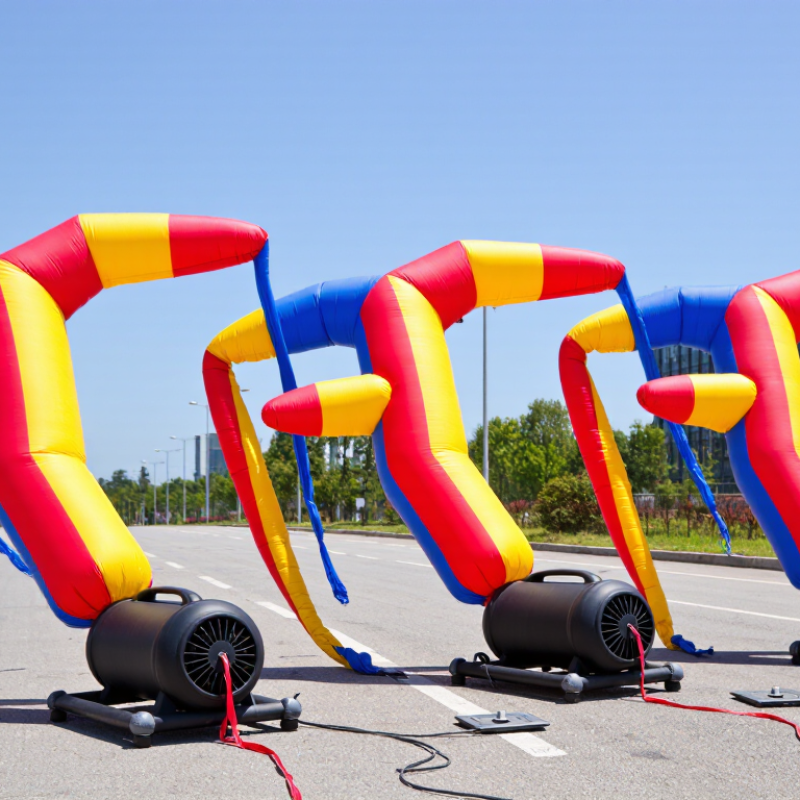
China has become a major sourcing market for inflatable advertising equipment and event display products. Among these products, an Air Dancer With Blower attracts attention through constant movement, bright colors, and strong roadside visibility. Reliable suppliers combine fabric selection, airflow design, sewing accuracy, and practical production experience. Their work affects how long the inflatable performs outdoors.

When evaluating China Top Air Dancer With Blower Suppliers, buyers should examine more than catalog photographs. Ask about Oxford cloth or nylon weight, stitching methods, blower performance, electrical specifications, and available sizes. Request clear product samples, factory videos, inspection records, and packaging details. Details matter. A stable blower should maintain steady movement without excessive noise or overheating. Reinforced seams and durable anchor points also support safer daily operation.

Professional suppliers usually explain customization limits, printing methods, delivery schedules, and after-sales support. They should communicate clearly about weather resistance and operating conditions. Claims still require verification. Not every attractive sample represents consistent mass production. A thoughtful buyer can compare fabric swatches, test airflow, and review independent quality evidence before placing an order. This process reduces surprises during exhibitions, shopping promotions, sports events, and public celebrations. It also reveals weaknesses early. Some suppliers may overlook small issues, such as zipper placement or cable protection. Those details can become costly later. Therefore, this guide introduces practical ways to assess Chinese manufacturers, compare technical capabilities, and select a dependable partner for an Air Dancer With Blower project. Reliable decisions come from evidence, not promises.
China Top Air Dancer With Blower Suppliers

Air Dancer Fundamentals: 2–5 m Height and 0.5–1.5 kW Blower Ratings

Air Dancer Fundamentals: 2–5 m Height and 0.5–1.5 kW Blower Ratings

For Chinese air dancer suppliers, height and blower power should be matched, not chosen separately. A 2–3 m tube often works with a 0.5–0.8 kW blower in sheltered areas. Taller 4–5 m displays usually need 1.0–1.5 kW for stable inflation. Wind, fabric weight, seams, and inlet diameter can change this requirement quickly. Bigger is not always better.

The International Energy Agency reports that electric motor systems use about 46% of global electricity. This makes blower efficiency important, even for temporary advertising equipment. A 1.0 kW blower consumes roughly 1 kWh per operating hour at its rated load. Actual use may differ because many blowers cycle or run below full capacity. Ask suppliers for airflow, static pressure, noise, and measured power data. Kilowatts alone tell an incomplete story.

Installation experience also exposes a common weakness. A 5 m dancer may inflate correctly indoors but lean outdoors when wind enters the sleeve. The 2023 ASHRAE Handbook emphasizes airflow resistance, pressure loss, and system conditions when selecting fans. These principles apply here, although air dancers are simpler systems. Check the base, zipper, cable protection, and continuous-duty rating. Some specifications look precise, yet testing conditions remain unclear. Request a short video showing inflation and power measurement under comparable conditions. That small step can prevent a visibly weak display.

China Supplier Benchmark: 110/220 V, 50/60 Hz, and 1,000–3,000 m³/h

China Top Air Dancer With Blower Suppliers

China’s strongest supplier benchmark starts with electrical compatibility: 110/220 V and 50/60 Hz. This range supports common event markets, but voltage selection must match the installation site. The U.S. Department of Energy’s fan-system guidance stresses that airflow performance depends on system resistance, not motor power alone. For air dancers, a practical benchmark is 1,000–3,000 m³/h, equal to roughly 589–1,766 CFM. Smaller units suit short indoor displays. Larger units support taller sleeves or outdoor use.

Real testing matters. AMCA fan-performance methods emphasize measured airflow against static pressure. A supplier should provide a performance curve, not only a maximum-airflow figure. Fabric shape, inlet mesh, duct length, and filter cleanliness can reduce delivered volume. In field checks, I would measure airflow after ten minutes, when motor heat and fabric tension stabilize. Catalog numbers can look perfect. They can still disappoint. Noise, restart behavior, plug type, and continuous-duty temperature deserve equal attention.

Tips: Request separate test values for 110 V and 220 V. Confirm both 50 Hz and 60 Hz operation. Ask for airflow at working pressure, not free-air conditions. Keep a spare fuse and clean the inlet screen regularly. One overlooked detail: a 3,000 m³/h blower may be excessive for a small sleeve, causing unstable movement and unnecessary noise. Supplier documentation should state test conditions, protection rating, duty cycle, and replacement-part availability.

Fabric and Safety Standards: 420D–600D Oxford Cloth, CE, and IEC 60335-2-80

China Top Air Dancer With Blower Suppliers

A reliable air dancer begins with fabric selection, not bright graphics. Many manufacturers use 420D to 600D Oxford cloth for outdoor inflatables. The “D” describes denier, or fiber thickness. Higher denier usually improves abrasion resistance. It does not automatically guarantee longer service life.

In real installations, fabric faces sunlight, rain, dust, folding, and constant airflow. A 420D fabric may suit lighter displays and easier transport. A 600D option can provide a stronger feel for windy locations. However, coating quality and stitching matter just as much. We inspect seam density, zipper placement, base reinforcement, and airflow openings. Small leaks can make a tall figure look weak. They also increase blower workload.

The blower requires separate attention. CE marking indicates that the product meets applicable European conformity requirements. It is not a general quality certificate. Suppliers should provide technical files, declarations, labels, and relevant test evidence. IEC 60335-2-80 covers particular safety requirements for certain electric fans, when applicable to the blower’s design and intended use. The correct assessment depends on voltage, environment, controls, and market.

A grounded plug is not enough.
Protection matters.

Ask for insulation checks, overheating protection, stable airflow, and clear operating instructions. We have sometimes seen attractive samples fail on zipper alignment or cable strain relief. That is worth admitting. A supplier’s credibility is shown through repeatable inspection records, realistic fabric samples, and honest limits, not only impressive product photos.

China Top Air Dancer With Blower Suppliers - Fabric and Safety Standards: 420D–600D Oxford Cloth, CE, and IEC 60335-2-80

Product Configuration Recommended Fabric Typical Fabric Weight Coating and Construction Blower Rating Range Electrical Safety Reference Common Documentation Best-Suited Use
Compact indoor air dancer
3–4 m height
420D Oxford polyester Approximately 180–220 g/m² PU-coated fabric; double-stitched stress points; reinforced blower sleeve 250–450 W, selected according to height, diameter, and air leakage IEC 60335-2-80 may be relevant to household and similar-use fans; verify the complete applicable standard set Electrical test report, user manual, rating label, material specification Indoor retail displays, exhibitions, schools, and short-term promotions
Standard outdoor air dancer
4–6 m height
420D or 500D Oxford polyester Approximately 200–260 g/m² Water-resistant PU coating; UV-resistant color system; webbing at high-load seams 450–750 W, with airflow matched to the tube pattern CE marking requires conformity with applicable EU legislation; IEC 60335-2-80 is used where its scope applies EU Declaration of Conformity, electrical safety report, IP information where claimed, care instructions Shopfronts, event entrances, outdoor advertising, and seasonal campaigns
Heavy-duty outdoor air dancer
6–8 m height
500D Oxford polyester Approximately 220–300 g/m² PU or acrylic-backed coating; reinforced base; corrosion-resistant hardware recommended 750–1,100 W, subject to local voltage and required static pressure IEC 60335-2-80 can support fan safety assessment when applicable; outdoor installation also requires suitable protection and grounding Declaration of Conformity, test reports, wiring diagram, grounding instructions, spare-parts list Construction sites, vehicle dealerships, outdoor festivals, and long operating periods
Premium large-format air dancer
8–10 m height
600D Oxford polyester Approximately 260–340 g/m² Heavy PU coating; multi-layer base reinforcement; replaceable blower connector 1,000–1,500 W, determined by overall dimensions and wind exposure CE conformity must cover the finished electrical assembly; assess the blower against the standards applicable to its intended use EU Declaration of Conformity, risk assessment, electrical test report, installation and anchoring guide Large venues, public events, commercial complexes, and high-visibility outdoor advertising
Custom printed air dancer 420D–600D Oxford polyester, selected by size and exposure Usually 180–340 g/m² Dye-sublimation or surface printing; print compatibility should be confirmed with the coating and fabric construction Matched to final dimensions, air openings, seam design, and operating voltage Confirm CE requirements for the complete product and retain technical documentation for the blower and electrical parts Artwork proof, fabric specification, conformity documentation, operating instructions, repair kit details Campaign-specific advertising, branded events, and temporary installations
Low-noise indoor configuration Lightweight 420D Oxford polyester Approximately 180–220 g/m² Low-leakage seams; balanced inlet and outlet design; acoustic treatment may be added around the blower 200–500 W, depending on height and desired movement Check fan electrical safety, noise data, overheat protection, and the requirements of the destination market Noise test data, electrical test report, user manual, maintenance schedule Shopping centers, indoor halls, trade shows, and venues with sound restrictions
Technical note: Fabric denier and weight are specification ranges rather than universal classifications. CE is a conformity marking, not a product-quality grade. IEC 60335-2-80 applies within its defined scope for fans, so the applicable edition, product type, voltage, installation environment, and other relevant standards should be verified before procurement.

Performance Testing: Airflow, Wind Resistance, Noise, and 8–12 h Duty Cycles

China Top Air Dancer With Blower Suppliers

Reliable air dancer suppliers should provide measurable performance data, not attractive photographs alone. In our workshop checks, we record airflow near the tube opening with a calibrated anemometer. We also inspect inflation speed and stability during repeated starts. A strong blower should maintain shape without excessive pressure. Our first test was too optimistic because the fabric was newly unpacked. Material age changed the results.

Wind resistance testing needs controlled conditions. We use adjustable fans and observe bending, twisting, and partial collapse. Outdoor performance can differ sharply from indoor testing.

Noise is measured one meter from the blower, with the surrounding room documented. A quiet motor matters near entrances, exhibitions, and residential areas.

We also run complete 8–12 hour duty cycles. Temperature, airflow, vibration, and noise are recorded every hour. One unit became warmer after eight hours, so we would not claim perfect endurance.

Tips: Ask suppliers for raw test records and operating conditions. Request videos showing long-duration operation. Check whether airflow readings use the same instruments each time. Inspect seams, cable connections, and blower filters after testing. Small maintenance details often decide whether performance remains stable.

How to Compare Chinese Suppliers: MOQ, Lead Time, Warranty, and QC Data

When comparing China’s top air dancer with blower suppliers, treat MOQ as a cost-control signal, not just a price barrier. A factory quoting 50 units may offer better customization than one requiring 500. Request a sample, exact fabric weight, blower wattage, packed dimensions, and carton photos. Record every promise.

Lead time should include sampling, production, inspection, and port handling. The World Bank’s 2023 Logistics Performance Index gave China a score of 3.7 out of 5, showing strong logistics capacity but not guaranteed delivery speed. Ask suppliers to separate factory days from shipping days. For repeat orders, require a written delay procedure. Small details matter.

Warranty terms need measurable coverage. Confirm whether they cover blower failure, stitching defects, color fading, and replacement freight. A 12-month warranty sounds useful, but exclusions may weaken it. For QC, request pre-shipment photos, serial records, inflation tests, seam checks, and electrical inspection results. ISO 2859-1 sampling can support a documented acceptance plan, such as agreed AQL levels. Ask for test records, not vague assurances. Keep the evidence.

One supplier once passed visual inspection but used a weaker zipper than the approved sample. That mistake was preventable. Recheck samples before mass production, even when the factory seems experienced.

FAQS

Which voltage and frequency should an air dancer use?

Match the blower to the installation site. Common options include 110 V or 220 V, with 50 Hz or 60 Hz operation. A plug shape alone is not enough. Confirm the exact local electrical requirements before installation.

What airflow range suits most air dancer displays?

A practical range is 1,000–3,000 m³/h. Smaller units suit short indoor sleeves. Larger units support taller figures or outdoor displays. More airflow is not always better.

Why can a 3,000 m³/h blower perform poorly on a small sleeve?

Excess airflow may create unstable movement and unnecessary noise. The fabric can twist instead of standing smoothly. We should admit this: maximum power can produce a worse display.

What airflow information should a supplier provide?

Request a performance curve showing airflow against static pressure. Free-air figures can look impressive but mislead. Ask for separate test values at 110 V and 220 V. Confirm results for both 50 Hz and 60 Hz.

When should airflow be measured during testing?

Measure airflow after about ten minutes of operation. Motor heat and fabric tension need time to stabilize. Check the inlet screen and duct condition first. Real conditions matter more than a catalog headline.

Which fabric details affect outdoor durability?

Common choices include 420D and 600D Oxford cloth. A 420D fabric is lighter and easier to transport. A 600D fabric may feel stronger in windy areas. Coating, stitching, seams, and base reinforcement also matter.

What safety evidence should be requested for the blower?

Ask for insulation checks, overheating protection, operating instructions, and protection ratings. CE marking shows applicable European conformity, not overall product quality. IEC 60335-2-80 may apply, depending on the blower design and use.

What small defects should an inspection include?

Check zipper alignment, seam density, cable strain relief, and airflow openings. Inspect the base reinforcement closely. Small leaks can weaken the figure and increase blower workload. Attractive samples can still contain ordinary mistakes.

How can an air dancer be maintained between events?

Clean the inlet screen regularly and keep a spare fuse available. Dry the fabric before folding it. Store it away from sharp edges and heavy dust. I would not trust memory alone; use a simple inspection checklist.

Conclusion

Choosing the right Air Dancer With Blower requires evaluating both the inflatable design and the blower’s operating performance. Common units range from 2–5 meters in height and use blowers rated at approximately 0.5–1.5 kW. Chinese suppliers typically offer 110/220 V compatibility, 50/60 Hz frequency options, and airflow capacities between 1,000 and 3,000 m³/h. Buyers should also review fabric quality, with 420D–600D Oxford cloth providing a practical balance of durability, weight, and weather resistance. Safety documentation, including CE conformity and IEC 60335-2-80-related requirements, should be verified before purchase.

Supplier comparisons should be based on measurable performance rather than price alone. Request test data covering airflow, wind resistance, operating noise, and continuous duty cycles of approximately 8–12 hours. Important commercial factors include minimum order quantity, production lead time, warranty coverage, spare-part support, and documented quality-control procedures. A supplier that provides clear specifications, inspection records, and consistent testing results can help ensure reliable operation and reduce long-term maintenance risks.


Charlotte

Charlotte

Charlotte is a seasoned marketing professional with a deep understanding of the company's portfolio and a passion for elevating its presence in the market. With a keen eye for detail and a commitment to excellence, she ensures that our professional blog is regularly updated with insightful articles......