How to Choose a Wacky Inflatable Tube Man for Your Business?

Time:2026-11-02 Author:Henry
0%

A Wacky Inflatable Tube Man can turn an ordinary storefront, event entrance, or sales lot into a place people notice. Its waving fabric catches the eye, but the right model depends on more than color or height. Start with the viewing distance and available space. A roadside display may need a taller figure and a clear sightline, while a compact shop entrance may call for a smaller design that does not crowd customers. Check the power source, blower requirements, and surface available for anchoring. Wind and rain matter, too. Follow the manufacturer’s setup and operating guidance. Space matters. Small details make a real difference.

Before buying, compare fabric quality, seams, blower specifications, replacement-part access, warranty terms, and cleaning instructions. Ask the supplier how the unit should be secured and what conditions call for taking it down. If possible, review the product dimensions and setup steps rather than relying on photos alone. A display that looks huge online can feel awkward beside a narrow doorway. One easy mistake is choosing the loudest design simply because it stands out. Attention is useful only when the figure fits the brand, location, and daily routine. Not every site fits. There is no perfect option for every business. A measured choice, supported by clear product details and practical setup planning, is usually more dependable than an impulse purchase. Weigh visibility against upkeep, space, and operating needs before deciding.
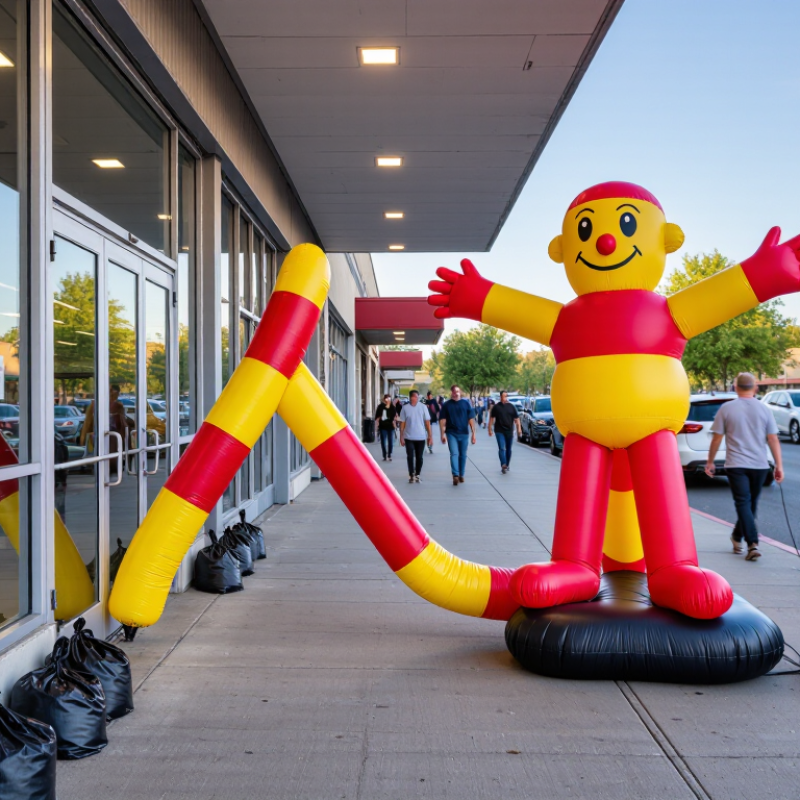
How to Choose a Wacky Inflatable Tube Man for Your Business?

Define Your Business Goals and Display Location

Define the job before choosing height or color. A wacky inflatable tube man may announce a grand opening, guide drivers to a temporary sale, or make a storefront easier to spot. Each goal needs a different setup. For quick roadside recognition, prioritize movement and contrast. For a sidewalk display, keep the figure clear of entrances and pedestrian paths. Visibility matters. The Outdoor Advertising Association of America reported U.S. out-of-home advertising revenue of $9.1 billion in 2023. That figure shows the scale of investment in public-facing ads, but it does not prove an inflatable will increase your sales.

The FedEx Office 2012 consumer signage survey reported that 76% of respondents had entered a store they had not visited before because of its signs. It also reported that 68% had bought a product or service after noticing a sign.

The survey is dated, so treat it as a directional clue, not a forecast. Track results at your own location, and be willing to move the display if customers barely notice it.

Match the display to the actual site. Stand where customers approach, then check sightlines from a car, sidewalk, and nearby intersection. Note trees, parked vehicles, overhead wires, and afternoon glare. Measure the usable space, and check the manufacturer’s setup requirements for power, anchoring, and clearance. A busy corner can still be a poor location if the figure is hidden behind a sign or competes with too many visual distractions.

Compare Tube Man Styles, Colors, and Branding Options

A tube man’s style should fit the space, not just catch the eye. A classic single-leg dancer suits a storefront with a clear view from the road, while a two-leg model can create a broader silhouette in an open lot. Check the available height, wind exposure, and distance from passing traffic before choosing. Movement helps attract attention, but a crowded sign or low awning can hide the display.

Color affects visibility and brand fit. High-contrast combinations, such as yellow against dark lettering, are easier to distinguish from a distance; still, match the main color to your signage rather than choosing the loudest option by default. The Outdoor Advertising Association of America reported that U.S. out-of-home advertising revenue reached $9.1 billion in 2023, up 2.1% year over year. This industry figure describes the broader advertising market, not tube-man performance, but it underscores the continued use of visible, place-based promotion. Keep it readable.

For branding, compare a plain fabric body with custom panels, printed logos, or a matching inflatable sign. Use one large logo and a short phrase; small details may disappear as the fabric moves. Ask the supplier for a proof showing colors and artwork placement, then check it at actual viewing distance. I would not assume a custom print guarantees more visits. Test one clear design first, and revise it if customers cannot recall the message.

Choose the Right Height, Airflow, and Power Source

A tube man should be visible, not overwhelming. For a sidewalk storefront, a six-foot model may rise above parked cars and nearby displays. A roadside lot often needs more height, but overhead wires, awnings, and tree branches set real limits. Measure the full setup area, including its swaying arc. Measure twice.

Height alone does not determine blower needs. Wider fabric, heavier material, and a loose sleeve can affect how steadily the figure moves. Check the display’s recommended airflow and blower rating instead of choosing by height alone. Too little airflow can leave the body limp; too much may increase stress on seams or create noisy flutter. Keep the base clear of leaves and paper. Airflow varies.

A nearby outlet is simplest, but confirm voltage, amperage, and cord length against the blower label. For outdoor use, choose a weather-suitable connection and route cords away from foot traffic and standing water. If using a generator, check its continuous output and starting demand; a small unit may struggle at startup. Follow the setup instructions, then test everything before opening. Listen for changes in motor sound or fabric movement. That check is easy to skip.

Check Materials, Safety Features, and Weather Resistance

How to Choose a Wacky Inflatable Tube Man for Your Business?

Start with fabric, seams, and the fan—not just bright colors. Outdoor units often use coated polyester, but coating quality and stitching vary. Check whether seams are reinforced and whether the fabric resists tearing and fading. Ask for test records, including any relevant NFPA 701 flame-propagation results; that standard evaluates textiles and films, not the complete unit’s outdoor safety. A heavier fabric is not automatically a safer choice.

Weather matters. The U.S. National Weather Service’s Beaufort scale describes 19–24 mph winds as a “fresh breeze,” when large branches move. That is a weather reference, not a safe operating limit for an inflatable. Follow the manufacturer’s lower wind limit, secure every anchor point, and unplug and store the unit when conditions worsen. Rain can also affect electrical connections, so check the fan and cables for outdoor ratings.

Tips: Inspect seams, stakes, and the power cable before each use. Keep the fan intake clear of leaves. Ask for written wind limits and setup instructions. A gust can arrive quickly; I’d rather take it down early than guess.

Plan Installation, Care, and Long-Term Use

Choose a location before choosing the inflatable. Measure the open area, including overhead clearance and the space needed for people to pass safely. Check the ground for sharp debris, uneven surfaces, and nearby obstacles. A clear site makes setup easier. Measure twice.

Plan for power and weather, too. Place the blower near a suitable outlet, and keep cords away from walkways and standing water. Follow the product instructions for anchoring and operating conditions. Wind limits vary, so do not guess. If conditions exceed the stated limits, switch it off and take it down.

Care starts with a simple routine. Before each use, inspect the fabric, seams, tie-down points, and blower intake. Remove leaves or dust, and check that anchors remain secure. After use, let the inflatable dry fully before folding it; trapped moisture can lead to mildew. Keep it in a clean, dry storage area, away from pests and heavy objects. A rushed pack-up may save a few minutes, but it can create more work later. Keep a small maintenance log with setup dates, repairs, and any unusual wear. Review it each season, and replace damaged parts only with compatible components. No inspection catches everything, but a steady routine helps you spot trouble early.

How to Choose a Wacky Inflatable Tube Man for Your Business? - Plan Installation, Care, and Long-Term Use

Planning Factor Practical Guidance What to Check Before Purchase or Setup
Display height Choose a height that is easy to see from your intended viewing distance while fitting the site safely. Measure overhead clearance, including signs, tree branches, canopies, and utility lines. Compare the full inflated height with the manufacturer’s specifications.
Site footprint and clearance Allow room for the base, blower, access for inspection, and the tube’s movement in the wind. Keep the display away from vehicle routes, pedestrian paths, doors, and anything that could snag or obstruct the fabric.
Wind and weather Use the display only in conditions permitted by its instructions. Take it down when conditions exceed the stated limits or become unsafe. Check the manufacturer’s wind rating and operating guidance. Stop use during storms, lightning, or other hazardous weather.
Anchoring Secure the base using the supplied anchoring method and hardware appropriate for the installation surface. Confirm that stakes, weights, or other approved anchors are suitable for the site. Inspect anchor points before each use.
Power supply Match the blower’s electrical requirements to a suitable outdoor power source. Check the blower’s voltage and current rating. Use outdoor-rated connections and appropriate ground-fault protection; keep plugs and connections dry.
Blower placement Place the blower on a stable surface with its air intake unobstructed. Keep the intake clear of leaves, loose fabric, and debris. Protect the blower from water in accordance with its instructions.
Fabric and seams Select a material and construction intended for the expected frequency of use and outdoor exposure. Ask about fabric care, seam construction, repair options, and whether replacement parts are available.
Daily inspection Inspect the tube, seams, base, blower, power cord, and anchors before operating. Do not use equipment with damaged fabric, loose anchors, frayed cords, unusual noise, or a malfunctioning blower until it has been checked or repaired.
Cleaning and drying Follow the care instructions. Remove dirt with an approved cleaning method and let the fabric dry completely before storage. Avoid harsh cleaners or abrasive tools unless the manufacturer confirms they are suitable. Storing damp fabric can encourage mildew.
Storage and long-term use Deflate, fold, and store the unit in a clean, dry place away from sharp objects and excessive heat. Keep the blower and fabric protected between uses. Periodically check stored equipment and replace worn components as needed.
Operating schedule Plan operation around staffed hours, local site rules, weather, and the blower’s operating instructions. Estimate access to power and the time needed for setup, inspection, shutdown, and packing away.

Planning note: Product dimensions, electrical requirements, anchoring methods, and weather limits vary by model. Use the specific manufacturer’s instructions and applicable local safety requirements as the final authority.

FAQS

How should I choose between a single-leg and two-leg tube man?

A single-leg style suits a storefront visible from the road. A two-leg model makes a wider shape in an open lot. Check overhead clearance and nearby obstacles first.

Which colors are easiest to see from a distance?

High-contrast colors, such as yellow against dark lettering, are easier to distinguish. Match the main color to nearby signs. Keep it readable.

What branding details work best on moving fabric?

Use one large logo and a short phrase. Small artwork can disappear as the fabric moves. Ask to review a print proof at the real viewing distance.

Does custom printing guarantee more customer visits?

No. A custom print cannot promise more visits. Try one clear design and ask whether customers remember its message. I might be overthinking the artwork, but testing helps.

What should I check before using an inflatable outdoors?

Inspect the fabric, seams, stakes, and power cable. Look for reinforced stitching and ask for written setup instructions. Keep the fan intake clear of leaves.

How can I decide whether the weather is suitable?

Follow the unit’s stated wind limit, not a general weather reference. Secure every anchor point. If conditions worsen, switch it off and take it down. Wind changes fast.

What should I measure before choosing an installation spot?

Measure the open area and overhead clearance. Leave room for people to pass safely. Check for sharp debris, uneven ground, and nearby obstacles. Measure twice.

How should I store the inflatable after use?

Let it dry fully before folding to help prevent mildew. Store it in a clean, dry place away from pests and heavy objects. Keep a small maintenance log.

Conclusion

Choosing a Wacky Inflatable Tube Man starts with understanding what your business wants to achieve and where the display will be placed. Consider whether the goal is to attract passing drivers, draw attention to an entrance, or make an event more noticeable. Then compare different styles, colors, and customization options to find a design that suits your setting and communicates your message clearly.

Next, select a height that fits the available space, along with suitable airflow and a practical power source. Check that the materials are durable and that the unit includes appropriate safety features for its intended use. Weather resistance is also important if the display will be outdoors. Before purchasing, plan how it will be installed, cleaned, stored, and maintained. These choices can help your inflatable display remain effective and in good condition over time.


Henry

Henry

Henry is a dedicated marketing professional with a profound expertise in the company's offerings. With years of experience in the industry, he possesses an impressive understanding of the market dynamics and consumer behaviors that drive success. Henry is committed to sharing his insights through......